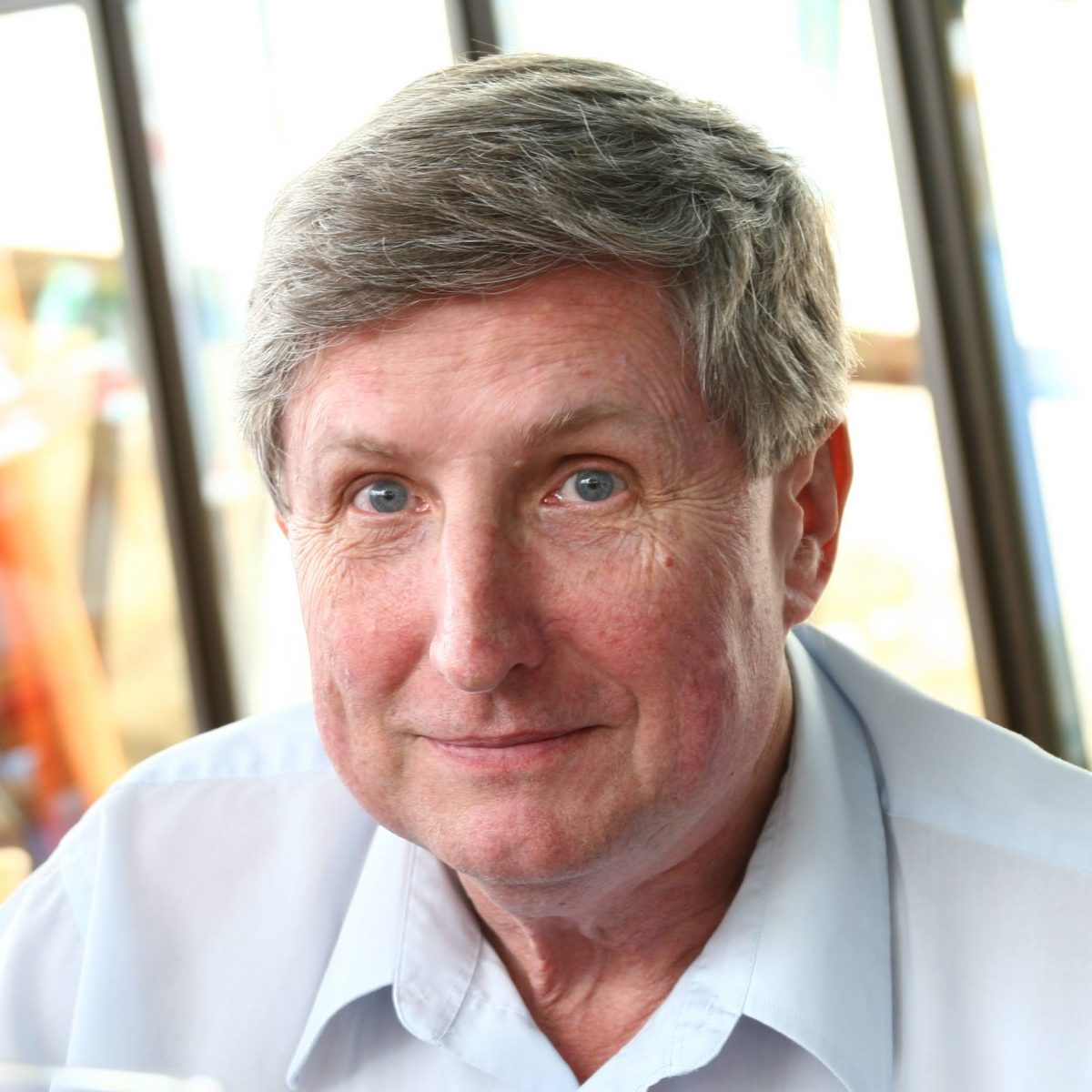
Sadly, Board of Trustees Distinguished Professor Emeritus William C. Stwalley passed away in the Twin Cities of Minnesota on October 7, 2025 (his 83rd birthday), with his family by his side. After growing up in southern California, where he met his wife Mauricette, Bill received his undergraduate degree in chemistry from Caltech and his PhD in physical chemistry from Harvard under the mentorship of Nobel Laureate Dudley Hershbach. He skipped the MS and any postdoctoral opportunity, immediately taking a faculty position in the Chemistry Department at the University of Iowa, where he received tenure after only 4 years and was promoted to Full Professor after only 7 years. Obviously, Bill climbed quickly up the academic ladder. At Iowa, he eventually became the George Glockler Professor of Physical Sciences and the Director of the Iowa Laser Facility. In 1993, UConn Physics was fortunate to lure Bill to Storrs to become the Head of the Physics Department, a position he held for 18 years. Bill was also the founder and Director of the Connecticut Laser Facility. He retired in 2016.
Bill’s research was mainly in the field of atomic, molecular, and optical (AMO) physics. In particular, his work involved relatively simple molecules and their corresponding spectroscopy, as well as the long-range interactions between atoms. Early on, his prescient theoretical works on low-temperature spin-polarized hydrogen and Feshbach resonances paved the way for the eventual realization of atomic Bose-Einstein condensation, which has become a major research area in AMO physics over the last 30 years. At UConn, his work focused mainly on ultracold (<1 mK) molecules, and their production via the process of photoassociation, whereby two atoms are coaxed to bind together with appropriately tuned laser light. On these topics, Bill collaborated closely with UConn colleagues Robin Cote, Ed Eyler, and Phil Gould, initiating and bringing to fruition many joint research projects. In terms of funding, Bill’s name on a proposal was often like a back-stage pass – it got you in. Bill also collaborated productively with colleagues from across the nation and around the world. As a result, he traveled extensively, especially to Europe and Eastern Asia. These visits were both to teach, via lectures and discussions, and to learn, via conferences and visits to labs and institutes.
Bill’s research productivity was very impressive, as evidenced by his 338 publications, 8 edited books, and 6 patents. His 1997 patent, and corresponding publication, on “Multiple Single Frequency Laser System and Method of Optical Manipulation of Molecules”, with John Bahns and Phil Gould, was quite impactful. It helped jump start the field of laser cooling of molecules, currently a very active area of AMO physics (but the patent is yet to make a dime!). Bill’s extensive accomplishments were recognized by a number of awards, including: Alfred P. Sloan Fellow; Fellowship in both the American Physical Society (APS) and the Optical Society of America (OSA) as well as in the Connecticut Academy of Science & Engineering and the Connecticut Academy of Arts & Sciences; Connecticut Medal of Science; appointment as a UConn Board of Trustees Distinguished Professor; and OSA’s William F. Meggers Award.
In addition to his long and valuable leadership of the Physics Department as its Head, Bill was heavily involved with other facets of UConn, serving in its Senate and on numerous University committees for planning, organizing, reviewing and advising. He also provided a great deal of service at the professional society level, especially for the APS and the OSA. A few examples of the duties Bill fulfilled include: Chair of the APS Division of Atomic, Molecular, and Optical Physics (DAMOP); Chair of the International Council on Quantum Electronics; and chair or member of many prize/award/fellowship committees. He was also an OSA Traveling Lecturer. In terms of conferences, Bill helped found the International/Interdisciplinary Laser Science (ILS) Conferences, chaired a Gordon Research Conference (GRC) on Atomic and Molecular Interactions as well as a GRC on Nonlinear Optics and Lasers, and helped organize many other meetings. Bill served on a number of journal editorial boards, and many review panels for institutions and proposal funding. He also spent a year as an Associate Program Director (Quantum Chemistry) at the National Science Foundation.
Over his 48 year academic career at both Iowa and UConn, Bill mentored many undergraduates, graduate students, postdocs, research staff, and visitors – motivating and educating them, and helping them advance to the next steps in their careers.
Bill was described in his retirement tribute as a “Man of Many Molecules”. But he was also a man of many friends, and a man of many collaborators, two groups which had a great deal of overlap. His generosity, intellect, extensive knowledge of both physics and chemistry, and effectual leadership will be sorely missed by these “many”, as well as by his UConn colleagues and the members of his loving family.
In Bill’s memory, donations can be made to: The University of Connecticut Foundation, Edward N. Frisius Memorial Fellowship, 2390 Alumni Dr., Storrs, CT 06269-3206
P.L. Gould 08/04/26
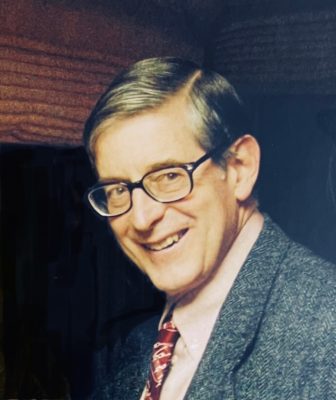 Win’s research was primarily in the field of atomic, molecular, and optical (AMO) physics. The systems he studied covered a diverse range, including: electrons; ions (both positive and negative); atoms; molecules; and photons. They also spanned a wide spectrum of energies, from relativistic to ultracold. His experiments employed a variety of tools, such as lasers, spectrometers, particle beams, accelerators, and traps for atoms and ions. Win investigated many interesting topics, including: charge-exchange collisions; highly-charged ions; molecular spectroscopy; collision-induced x-ray emission; relativistic negative ion beams; atom interferometry; linear rf traps for ions; and nonlinear dynamics (chaos). He was very productive, with his work resulting in over 100 journal publications. His latest research, performed mainly after officially retiring, involved interactions between overlapping samples of trapped ions and ultracold neutral atoms, and garnered significant attention.