The University of Connecticut, Department of Physics, is proud to announce the 28th Annual Katzenstein Distinguished Lecturer on Friday, October 16, 2026, by Professor Federico Capasso.
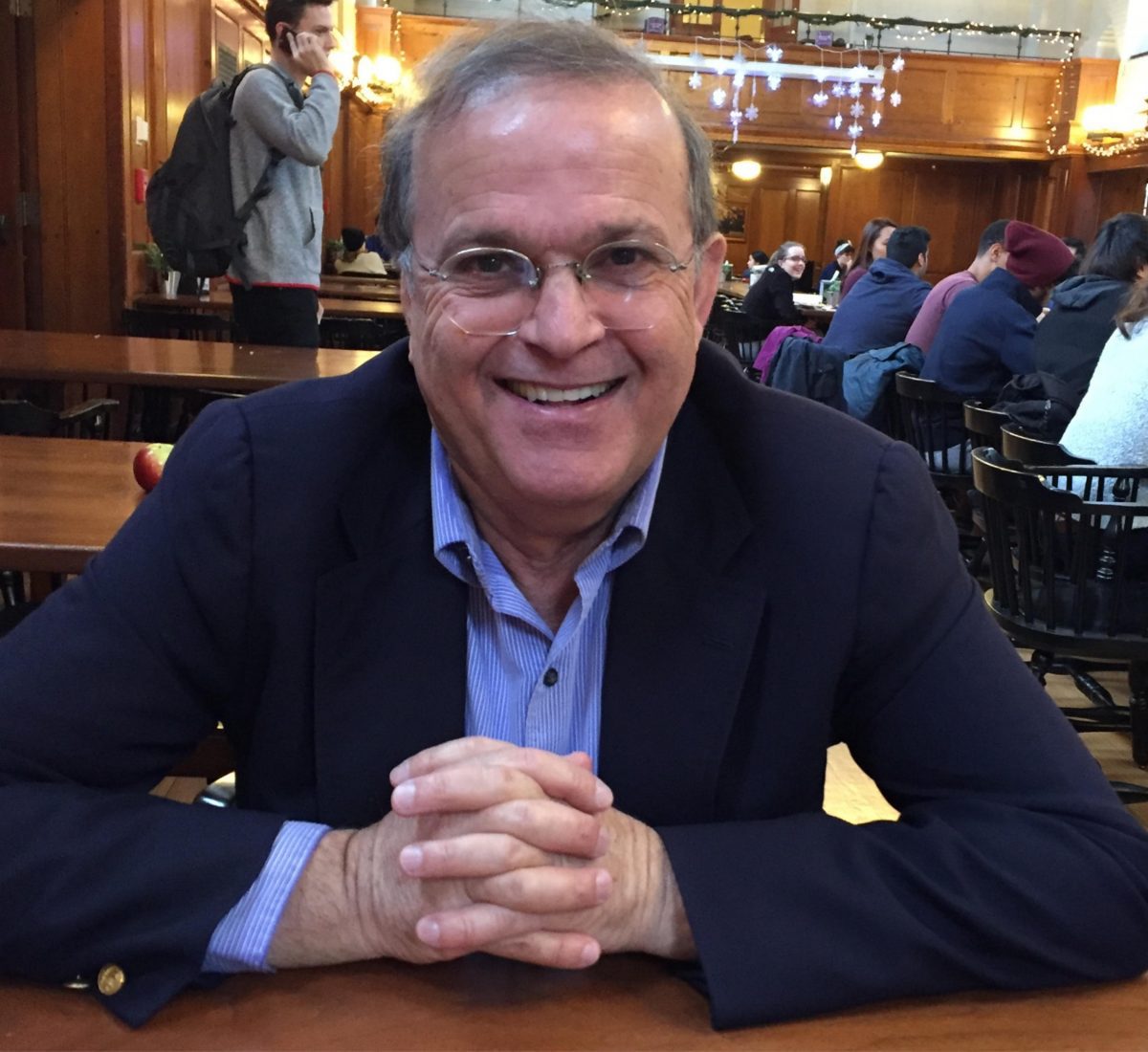
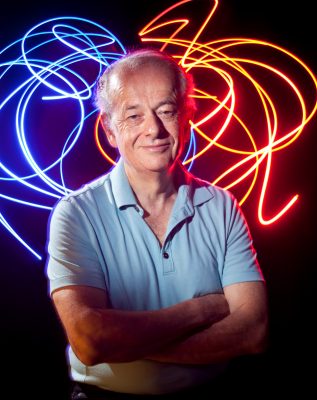
Federico Capasso is Robert L. Wallace Professor of Applied Physics and Vinton Hayes Senior Research Fellow in Electrical Engineering at Harvard University. He received the Doctor of Physics degree, summa cum laude, from the University of Rome, Italy, in 1973 and after doing research in fiber optics at Fondazione Ugo Bordoni in Rome, joined Bell Labs in 1976. He was Vice President of Physical Research (2000-2002) before joining Harvard. He and his collaborators made many wide-ranging contributions to semiconductor devices, pioneering the design technique known as band-structure engineering. He applied it to novel low noise quantum well avalanche photodiodes, heterojunction transistors, memory devices and lasers. He and his collaborators invented and demonstrated the quantum cascade laser (QCL).

His honors include membership in the National Academy of Sciences, the National Academy of Engineering, the American Academy of Arts and Sciences, the European Academy of Sciences and honorary membership in the Franklin Institute.
In 2005 he received, jointly with Nobel Laureates Frank Wilczek and Anton Zeilinger, the King Faisal International Prize for Science for his research on quantum cascade lasers. The citation called him “one of the most creative and influential physicists in the world.” The international society of optics and photonics (SPIE), selected Capasso to receive the 2013 SPIE Gold Medal, the highest honor the society bestows. He received the Frederic Ives Medal Prize from the Optical Society of America (the highest honor of the society in 2019) for seminal and wide-ranging contributions to optical physics, quantum electronics and nanophotonics.
He is also the recipient of the IEEE Edison Medal, Arthur L. Schawlow Prize in Laser Science, the Chisesi-Tomassoni award, the John Price Wetherill Medal of the Franklin Institute, the R. W. Wood Prize of the Optical Society of America, the IEEE Lasers and Electro-Optics Society W. Streifer Award, the Materials Research Society Medal, the Rank Prize in Optoelectronics (UK), the Duddell Medal and Prize of the Institute of Physics (UK), the Willis Lamb Medal for Laser Science and Quantum Optics, the Newcomb Cleveland Prize of the American Association for the Advancement of Science, the Moet Hennessy-Louis Vuitton “Leonardo da Vinci” Prize (France), the Welker Memorial Medal (Germany), the New York Academy of Sciences Award, the IEEE David Sarnoff Award in Electronics, the Goff Smith prize of the University of Michigan, the Berthold Leibinger Zukunftspreis for research in applied laser technology and the Julius Springer Prize in Applied Physics, the Jan Czochralski Medal of the European Materials Research society for his lifetime achievements in Materials Science, he was awarded the Balzan Prize for Applied Photonics and the Matteucci Medal in 2019 from the Italian National Academy of Sciences for his invention of the quantum cascade laser.
For details of the lecture please see the Web Calendar post.
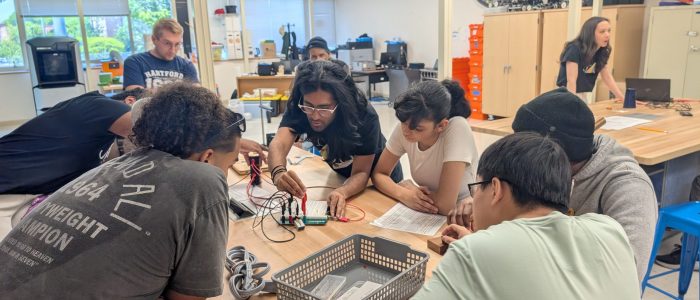 UConn STARs Outreach at HPHS Spring 2026