Web cookies (also called HTTP cookies, browser cookies, or simply cookies) are small pieces of data that websites store on your device (computer, phone, etc.) through your web browser. They are used to remember information about you and your interactions with the site.
Purpose of Cookies:
Session Management:
Keeping you logged in
Remembering items in a shopping cart
Saving language or theme preferences
Personalization:
Tailoring content or ads based on your previous activity
Tracking & Analytics:
Monitoring browsing behavior for analytics or marketing purposes
Types of Cookies:
Session Cookies:
Temporary; deleted when you close your browser
Used for things like keeping you logged in during a single session
Persistent Cookies:
Stored on your device until they expire or are manually deleted
Used for remembering login credentials, settings, etc.
First-Party Cookies:
Set by the website you're visiting directly
Third-Party Cookies:
Set by other domains (usually advertisers) embedded in the website
Commonly used for tracking across multiple sites
Authentication cookies are a special type of web cookie used to identify and verify a user after they log in to a website or web application.
What They Do:
Once you log in to a site, the server creates an authentication cookie and sends it to your browser. This cookie:
Proves to the website that you're logged in
Prevents you from having to log in again on every page you visit
Can persist across sessions if you select "Remember me"
What's Inside an Authentication Cookie?
Typically, it contains:
A unique session ID (not your actual password)
Optional metadata (e.g., expiration time, security flags)
Analytics cookies are cookies used to collect data about how visitors interact with a website. Their primary purpose is to help website owners understand and improve user experience by analyzing things like:
How users navigate the site
Which pages are most/least visited
How long users stay on each page
What device, browser, or location the user is from
What They Track:
Some examples of data analytics cookies may collect:
Page views and time spent on pages
Click paths (how users move from page to page)
Bounce rate (users who leave without interacting)
User demographics (location, language, device)
Referring websites (how users arrived at the site)
Here’s how you can disable cookies in common browsers:
1. Google Chrome
Open Chrome and click the three vertical dots in the top-right corner.
Go to Settings > Privacy and security > Cookies and other site data.
Choose your preferred option:
Block all cookies (not recommended, can break most websites).
Block third-party cookies (can block ads and tracking cookies).
2. Mozilla Firefox
Open Firefox and click the three horizontal lines in the top-right corner.
Go to Settings > Privacy & Security.
Under the Enhanced Tracking Protection section, choose Strict to block most cookies or Custom to manually choose which cookies to block.
3. Safari
Open Safari and click Safari in the top-left corner of the screen.
Go to Preferences > Privacy.
Check Block all cookies to stop all cookies, or select options to block third-party cookies.
4. Microsoft Edge
Open Edge and click the three horizontal dots in the top-right corner.
Go to Settings > Privacy, search, and services > Cookies and site permissions.
Select your cookie settings from there, including blocking all cookies or blocking third-party cookies.
5. On Mobile (iOS/Android)
For Safari on iOS: Go to Settings > Safari > Privacy & Security > Block All Cookies.
For Chrome on Android: Open the app, tap the three dots, go to Settings > Privacy and security > Cookies.
Be Aware:
Disabling cookies can make your online experience more difficult. Some websites may not load properly, or you may be logged out frequently. Also, certain features may not work as expected.
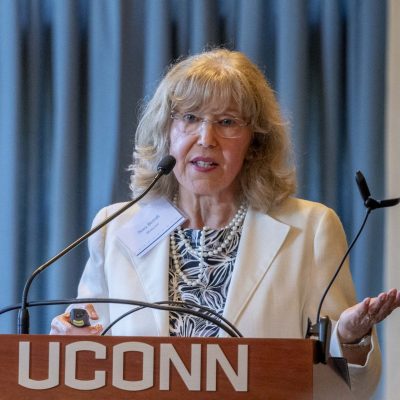
Nora Berrah, Board of Trustees Distinguished Professor of Physics, speaking at the UConn National Academy of Sciences Celebration at UConn School of Law on Aug. 27, 2024. (Sean Flynn/UConn Photo)
On August 27, 2024, scholars, trustees, and friends of UConn gathered at the University of Connecticut School of Law to honor members of the university community elected to the National Academies of Sciences, Engineering, and Medicine. Established by an Act of Congress in 1863, the National Academy of Sciences was followed by the National Academy of Engineering in 1964 and the National Academy of Medicine in 1970, all under the same congressional charter. Collectively, they are known as the National Academies.
“Few honors can compare with election to a National Academy. It is a recognition by peers and the Academy itself of outstanding achievements in research and scholarship,” President Radenka Maric said at the celebration. Six UConn faculty members are elected members of the National Academies, with the most recent being Professor of Physics Nora Berrah, whose election was announced in May 2024.
Last year, I wrote to you as a new Interim Head of Physics and only barely a month into my appointment. During the past year, we conducted a search for a permanent head and I was selected. For this, I am very grateful for the trust and support I received from the department. The past year has been a bit of a rollercoaster: on the one hand, the complex budget situation has preoccupied the department heads and upper administration and student protests sparked discussions about free speech and activism on campus. On the other hand, the Physics Department had another excellent year in terms of research, teaching, and outreach and I had the pleasure of meeting several of our generous donors.
The most notable achievements of the past year were the election of Prof. Nora Berrah to the National Academy of Sciences, one of the highest honors in science, and her appointment as a UConn Board of Trustees Distinguished Professor, the highest honor at UConn. These will be celebrated at a special Edward Pollack Distinguished Lecture, on October 14, 2024, given by a longtime friend and colleague of Nora’s, Prof. Philip Bucksbaum, himself a member of the National Academy of Sciences and the Marguerite Blake Wilbur Professor in Natural Science at Stanford University.
A number of other faculty received notable awards this year. Prof. Moshe Gai will travel to Romania on a U.S. Fulbright Scholarship. Two faculty received awards from the College of Liberal Arts and Science (CLAS): Prof. Peter Schweitzer for Faculty Mentoring of Faculty and Prof. Erin Scanlon for promoting Climate, Diversity, Equity, and Inclusion. CLAS also funded a Diversity, Equity, and Inclusion Initiative: “UConn STARs (Science, Technology, and Astronomy Recruits),” Prof. Cara Battersby, PI.
We gave out our two undergraduate awards: the Katzenstein prize for the best undergraduate research paper went to Danya Alboslani and our Mark Miller award to fund a summer research project went to Leilani Ainsworth, working with Prof. Simone Colombo
We are fortunate to welcome two new faculty this year:
Assistant Professor Aleksandra Kuznetsova is currently a fellow at the Flatiron Institute and works on star and planet formation. She will join us this August.
Assistant Professor Shohini Bhattacharya currently holds an Oppenheimer Fellowship at Los Alamos National Laboratory in theoretical nuclear physics and will join us in January 2025.
This was also a great year for outreach. We welcomed over 100 enthusiastic second graders for a variety of hands-on activities, organized by Prof. Jason Hancock and Sarah Trallero. We held a viewing party for the opening of our newly renovated observatory, spearheaded by Prof. Matt Guthrie and we got permission to officially name it in honor of the late Prof. Cynthia Peterson, who funded and built the observatory in 1980. And, we had another exciting eclipse viewing party organized by Prof. Jonathan Trump – the second in seven years! We are looking forward to hosting CU*IP: Conference for Undergraduate Women and Under-represented Minorities in Physics, sponsored by the American Physical Society. It will take place in January2025 and is being organized by Prof. Nora Berrah, along with a large local organizing committee. Finally, I would like to cordially invite you to attend our 26th annual Katzenstein Distinguished Lecture on Friday, November 15, 2024, which will be held in our department. This year’s speaker is Professor Adam Riess from Johns Hopkins University where he is the Bloomberg Distinguished Professor. He was a joint winner, with Drs. Saul Perlmutter and Brian P. Schmidt, of the 2011 Nobel Prize for Physics, awarded “for the discovery of the accelerating expansion of the Universe.” I hope you can all attend and catch up on everything that is going on in the department and the Universe! I look forward to seeing you there.
Every year, the American Physical Society (APS) sponsors CU*IP – Conference for Undergraduate Women and Gender Minorities in Physics – at several locations around the country. This year, led by Prof. Nora Berrah, UConn Physics applied to host this national conference in Storrs and our proposal was accepted for January 24-26, 2025! The purpose of the conference is to bring together over 120 undergraduates from around the country to learn about many research areas in physics and also to lean many skills for pursuing a career in Physics or Science, such as networking, applying to graduate school, finding role models in academia or industry, learning how to succeed as an underrepresented minority, etc.
While the conference is partially funded by the APS, the host institution needs to raise a substantial amount of funds. So far, we have commitments from UConn, some generous donors, such as the Ed Eyler and Karen Greer foundation, alumnus Mark Miller, and the Del Boca family, as well as the American Association for the Advancement of Science, and Mirion Technologies.
The current members of the local organizing committee, composed of faculty, staff and students, are Cara Battersby, Tom Blum, Cameron Brady, Carrie Cichocki, Simone Colombo, Meg Davis, Elena Dormidontova, George Gibson, Matt Guthrie, Adam Kolano, Luchang Jin, Dani Lipman, Jessica Mitlehne, Michael Rozman, Dave Perry, Erin Scanlon, Peter Schweitzer, Juliette Stecenko, Sarah Trallero, Kaley Wilcox, Alan Wuosmaa and Nora Berrah.
The planned events demonstrate the Physics Department’s and UConn’s commitment to helping undergraduate women and gender minorities pursue physics following their undergraduate degree by providing them the opportunity to learn about different career tracks in STEM fields, graduate studies, and various professions in physics.
We will be very grateful to receive any donations to assist the Department in hosting the conference, which will be used to cover students’ meals, accommodation and travel, as well as the invited speakers’ and panelists’ travel and accommodation. Please visit our website at: https://physics.uconn.edu/cuwip/
Lawrence “Larry” Kappers, passed away on Friday, August 2, 2024. Professor Lawrence (Larry) Kappers (aka “Kap”) retired in 2009, having joined the UConn Physics Department in 1973. After receiving his Ph.D. from the University of Missouri-Columbia and completing postdoctoral appointments at the University of Minnesota and Oklahoma State University, he developed an active research program in the optical and ESR spectroscopy of color-centers in inorganic insulators. Larry later became interested in the optical properties of 3d ions at high pressure and developed a diamond-anvil cell to complete the spectroscopic measurements. He was especially proud of his service to the department as director of the Perkin-Elmer Program, which led to a Masters degree in Physics with a concentration in optics, and also his involvement with the collaborative program between the physics department and the Institute for Crystal Physics in Budapest, Hungary. Larry continued his productive research contributions with a project funded by Radiation Monitoring Devices, Inc. on the luminescent properties of scintillator materials.
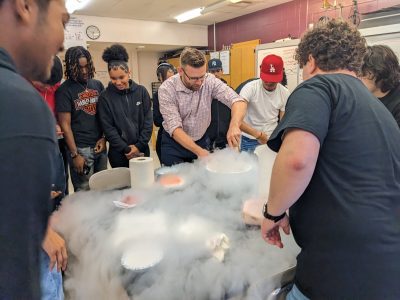
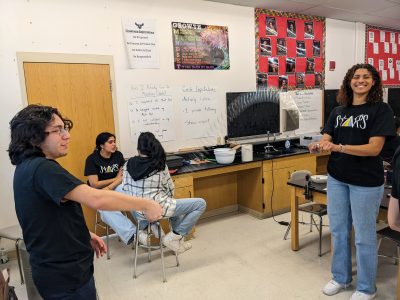
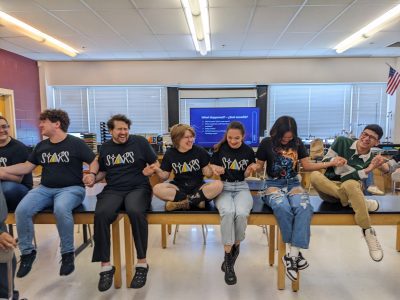
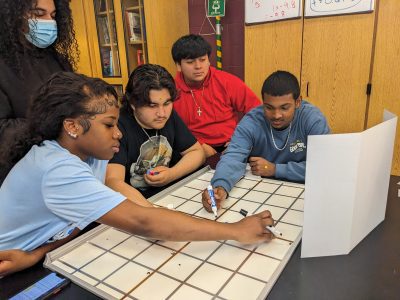
The UConn STARs group visited Hartford Public High School (HPHS) to teach physics for a total of eight class periods from May 6th-9th, 2024. UConn brought 16 undergraduate students from the STARs program to HPHS for our annual outreach program, during which we interacted with about 100 high school students. We collaborated with physics teacher Dr. Thomas Longyear to develop four lesson plans on topics of: 1) Phases of Matter, 2) Waves, 3) Electrostatics, and 4) Gravity over the course of the academic year. During our visit to HPHS, the STARs participants led these engaging lesson plans with hands-on demos and activities, over the course of four days. The goal of the STARs program is to improve the retention of students from Historically Excluded Groups (HEGs) in physics at UConn by addressing key factors responsible for their attrition. We have academic year events that focus on social engagement, professional development, and community building. The STARs program just concluded its 3rd year, with consistent progress and growth, and is looking forward to continued growth in our fourth year!
Pictured below are the STARs participants and the HPHS students during our May 2024 visit.
Father Thaddeus J. Burch passed away May 14, 2024 in Wauwatosa, WI. He was 93 years old, a Jesuit for 75 years and a priest for 62 years. His life combined his deep religious faith with a quest and appreciation for the world of physics. In addition to his two bachelor’s degrees in philosophy and theology, he earned bachelor’s and master’s degrees in physics and then a PhD at Fordham University. His PhD thesis on “A Nuclear Resonance Study of Order-Disorder in Ferromagnetic Alloys” was completed in 1968 under the direction of Professor Joseph Budnick. In 1974, Joe left Fordham to become the department chair in physics at the University of Connecticut and Thaddeus joined him as a visiting professor and a member of the Institute of Materials Sciences from 1974 to 1976. The research they completed together over the years led to 41 peer-reviewed journal articles that used NMR to probe ferromagnetic materials. Father Burch later joined Marquette University and was a professor of physics, physics department chair, and dean of the graduate school. Professor Budnick remembers Father Burch as “a dedicated and gifted student at Fordham and a creative and interactive researcher in the lab. He was a genuinely wonderful person in every way.”
Professor Moshe Gai, the director of the Laboratory for Nuclear Science, aka the Astrophysics Laboratory, https://astro.uconn.edu, was awarded a 2024-2025 Fulbright US Scholar Award to teach and do research in Romania. He will spend five months at the newly constructed world highest power laser lab (10 PW), the Extreme Light Infrastructure Nuclear Physics (ELI-NP), recently constructed by the EU in Bucharest, where Prof. Gai plans to apply expertise he gained working at Duke University for using Time Projection Chamber (TPC) detectors with gamma-beams to study stellar process in the lab.
The University of Connecticut, Department of Physics is proud to announce the 26th Annual Katzenstein Distinguished Lecturer that will be on Friday, November 15th. For the details of the lecture see the Web Calendar post.
Adam Riess is a Bloomberg Distinguished Professor, the Thomas J. Barber Professor in Space Studies at the Krieger School of Arts and Sciences at Johns Hopkins University, a distinguished astronomer at the Space Telescope Science Institute and a member of the National Academy of Sciences. He received his bachelor’s degree in physics from the Massachusetts Institute of Technology in 1992 and his PhD from Harvard University in 1996. His research involves measurements of the cosmological framework with supernovae (exploding stars) and Cepheids (pulsating stars). Currently, he leads the SHOES Team in efforts to improve the measurement of the Hubble Constant and the Higher-z Team to find and measure the most distant type Ia supernovae known to probe the origin of cosmic acceleration.
In 2011, he was named a co-winner of the Nobel Prize in Physics and was awarded the Albert Einstein Medal for his leadership in the High-z Supernova Search Team’s discovery that the expansion rate of the universe is accelerating, a phenomenon widely attributed to a mysterious, unexplained “dark energy” filling the universe. The discovery was named by Science magazine in 1998 as “the Breakthrough Discovery of the Year.” His accomplishments have been recognized with a number of other awards, including a MacArthur Fellowship in 2008, the Gruber Foundation Cosmology Prize in 2007 (shared), and the Shaw Prize in Astronomy in 2006.
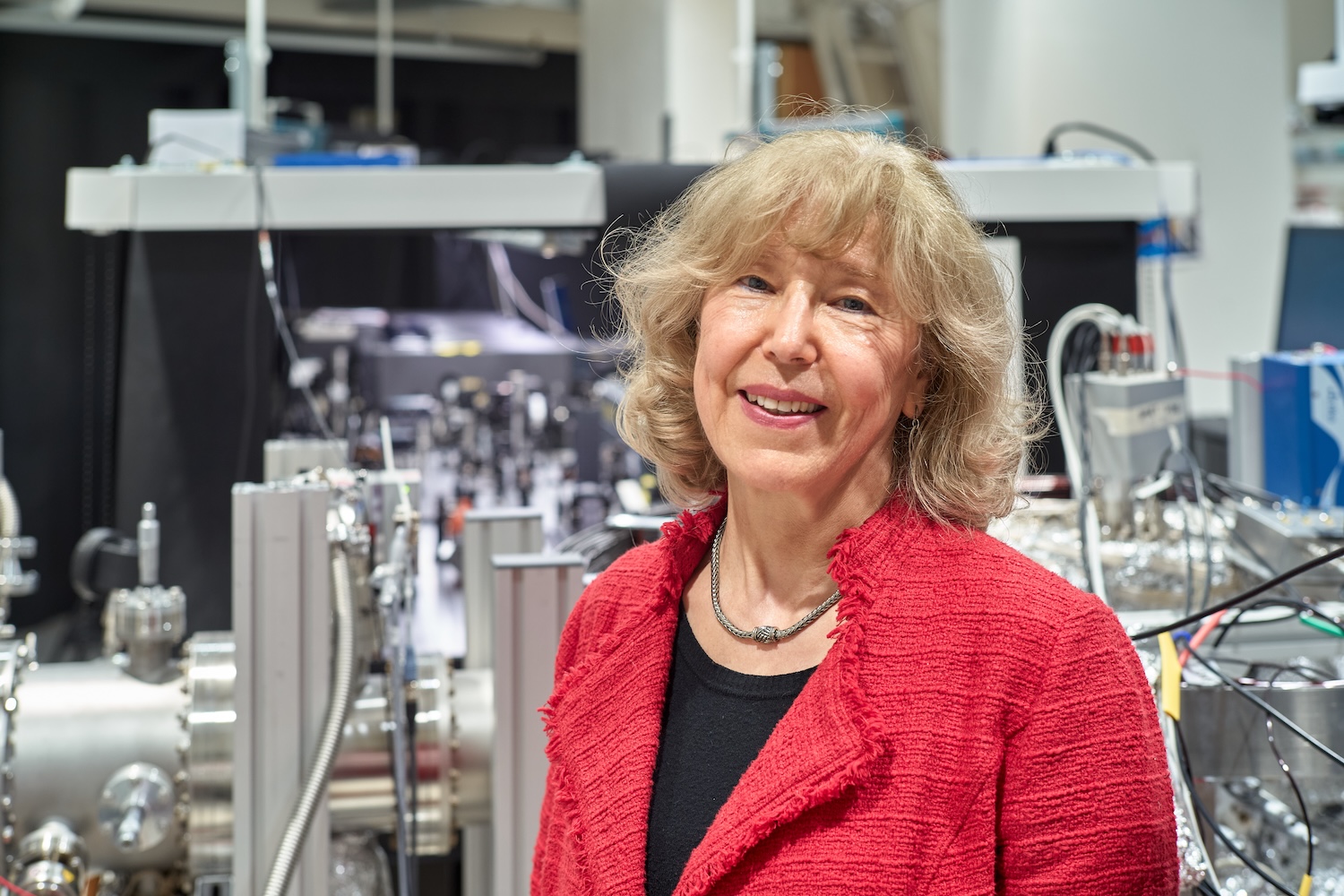
Nora Berrah, professor of physics, in her lab at the Gant Complex on May 2, 2024. (Peter Morenus/UConn Photo)
UConn physics professor Nora Berrah has been elected as a member of the National Academy of Science (NAS), becoming the fifth member from the UConn community to join the selective national society.
Members are elected “in recognition of their distinguished and continuing achievements in original research,” and the academy serves as an advisory board for the nation on issues relating to science and technology.
As a member of NAS, Berrah joins professor of economics Kathy Segerson, Dr. Cato Laurencin, Chief Executive Officer of The Connecticut Convergence Institute for Translation in Regenerative Engineering at UConn Health; Laurinda Jaffe, department chair and professor of cell biology at UConn Health; Dr. Se-Jin Lee, Presidential Distinguished Professor in the Department of Genetics and Genome Sciences at UConn Health; Mary Jane Osborn, professor of microbiology who died in 2019; and Henry N. Andrews, professor of botany who died in 2002.
“Membership in the NAS is one of the highest honors that can be given to a scientist,” says Ofer Harel, Interim Dean of the College of Liberal Arts and Sciences. “It is a recognition by peers and the academy of outstanding research achievements, and Nora absolutely falls into that category.”
Current academy members must nominate and vote for new members to join the academy, with no more than 120 members being elected each year.
“It’s just an unbelievably great honor,” says Berrah. “I feel very grateful for all the National Academy members who voted for me and for being elected.”
Berrah, the former department head of physics from 2014 to 2018, was elected in recognition of her research that focuses on ultrafast physical and chemical processes in quantum systems.
Berrah’s research has wide ranging impact
In her lab on campus, as well as at the Linac Coherent Light Source Free Electron Laser at SLAC National Accelerator Laboratory in Stanford, California, Berrah conducts “time resolved, photo-induced experiments to understand ultrafast fundamental mechanisms such as charge transfer, energy transfer, and proton transfer.”
The experiments measure super-fast reactions up to the femtosecond, or one quadrillionth of a second, as well as to the attosecond, or one quintillionth of a second which has important impacts on other scientific fields.
“We want to understand these processes, and ultimately we want to control them to achieve desired outcomes,” says Berrah. “I and my research group measure manifestations of quantum mechanics — using ultrafast lasers at the femtosecond and attosecond timescale to test fundamentals of quantum mechanics. Our research has a broad impact on chemistry, biology, material science, and environmental science.”
Berrah was also previously elected to the American Academy of Arts and Sciences and is a fellow of the American Association for the Advancement of Science. She earned a Davisson-Germer award from the American Physical Society and is a fellow of the American Physical Society.
She has also been an advocate for increasing the participation and retention of women in physics.
“I realized as an undergraduate student that there were just very few women, whether they’re undergraduate or graduate students, and it doesn’t make sense to me, because we all have a brain, and if we have an interest in physics, then we should pursue it,” says Berrah. “It’s a man-dominated field. And way back, women were not welcomed in physics.”
Over the course of her career, Berrah has worked to help women feel less isolated in the field, including serving as the chair of APS’ Committee on the Status of Women in Physics.
Berrah is currently chairing a committee in the physics department to organize a conference for undergraduate women and gender minorities in physics, that she says will occur January 24-26, 2025. She says it is an opportunity to help undergraduate women network and peer mentor with each other, so they don’t feel isolated, since they are often the only women in their classrooms.
The conference is a chance for women to learn together and become comfortable in the field, Berrah says.
“It’s important to mentor the next generation of women physicists and increase significantly their number,” says Berrah.
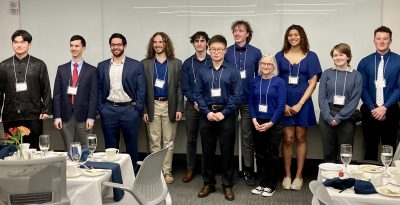
The initiation ceremony was held on Friday, April 26th. The event began at 3:00 with a pre-colloquium reception, followed by the colloquium at 4:00 in GW-002 and by the banquet and initiation ceremony at 6:00.
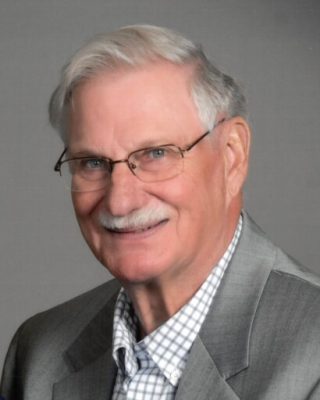 Lawrence “Larry” Kappers, passed away on Friday, August 2, 2024. Professor Lawrence (Larry) Kappers (aka “Kap”) retired in 2009, having joined the UConn Physics Department in 1973. After receiving his Ph.D. from the University of Missouri-Columbia and completing postdoctoral appointments at the University of Minnesota and Oklahoma State University, he developed an active research program in the optical and ESR spectroscopy of color-centers in inorganic insulators. Larry later became interested in the optical properties of 3d ions at high pressure and developed a diamond-anvil cell to complete the spectroscopic measurements. He was especially proud of his service to the department as director of the Perkin-Elmer Program, which led to a Masters degree in Physics with a concentration in optics, and also his involvement with the collaborative program between the physics department and the Institute for Crystal Physics in Budapest, Hungary. Larry continued his productive research contributions with a project funded by Radiation Monitoring Devices, Inc. on the luminescent properties of scintillator materials.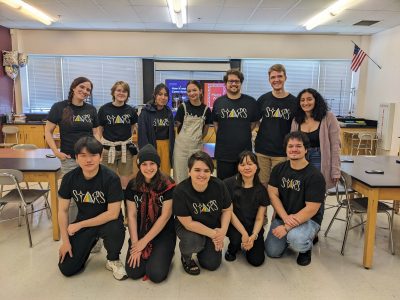
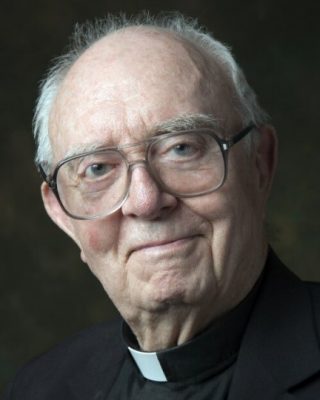 Father Thaddeus J. Burch passed away May 14, 2024 in Wauwatosa, WI. He was 93 years old, a Jesuit for 75 years and a priest for 62 years. His life combined his deep religious faith with a quest and appreciation for the world of physics. In addition to his two bachelor’s degrees in philosophy and theology, he earned bachelor’s and master’s degrees in physics and then a PhD at Fordham University. His PhD thesis on “A Nuclear Resonance Study of Order-Disorder in Ferromagnetic Alloys” was completed in 1968 under the direction of Professor Joseph Budnick. In 1974, Joe left Fordham to become the department chair in physics at the University of Connecticut and Thaddeus joined him as a visiting professor and a member of the Institute of Materials Sciences from 1974 to 1976. The research they completed together over the years led to 41 peer-reviewed journal articles that used NMR to probe ferromagnetic materials. Father Burch later joined Marquette University and was a professor of physics, physics department chair, and dean of the graduate school. Professor Budnick remembers Father Burch as “a dedicated and gifted student at Fordham and a creative and interactive researcher in the lab. He was a genuinely wonderful person in every way.”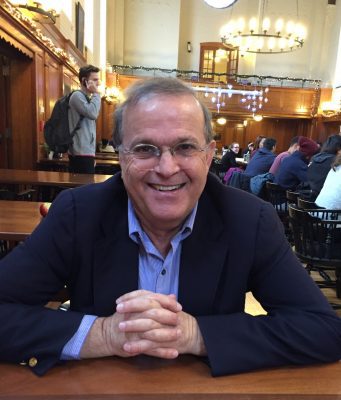
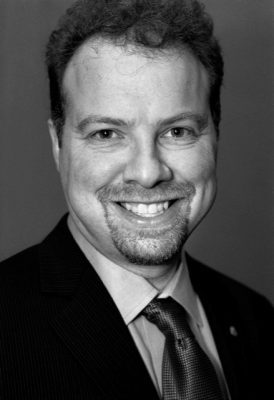 Adam Riess is a Bloomberg Distinguished Professor, the Thomas J. Barber Professor in Space Studies at the Krieger School of Arts and Sciences at Johns Hopkins University, a distinguished astronomer at the Space Telescope Science Institute and a member of the National Academy of Sciences. He received his bachelor’s degree in physics from the Massachusetts Institute of Technology in 1992 and his PhD from Harvard University in 1996. His research involves measurements of the cosmological framework with supernovae (exploding stars) and Cepheids (pulsating stars). Currently, he leads the SHOES Team in efforts to improve the measurement of the Hubble Constant and the Higher-z Team to find and measure the most distant type Ia supernovae known to probe the origin of cosmic acceleration.