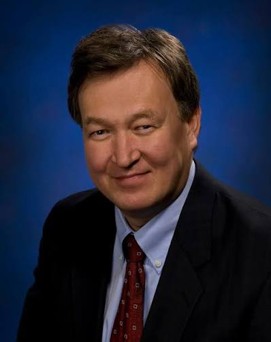
Professor Federico Capasso, Katzenstein Distinguished Lecturer

July 2, 2026

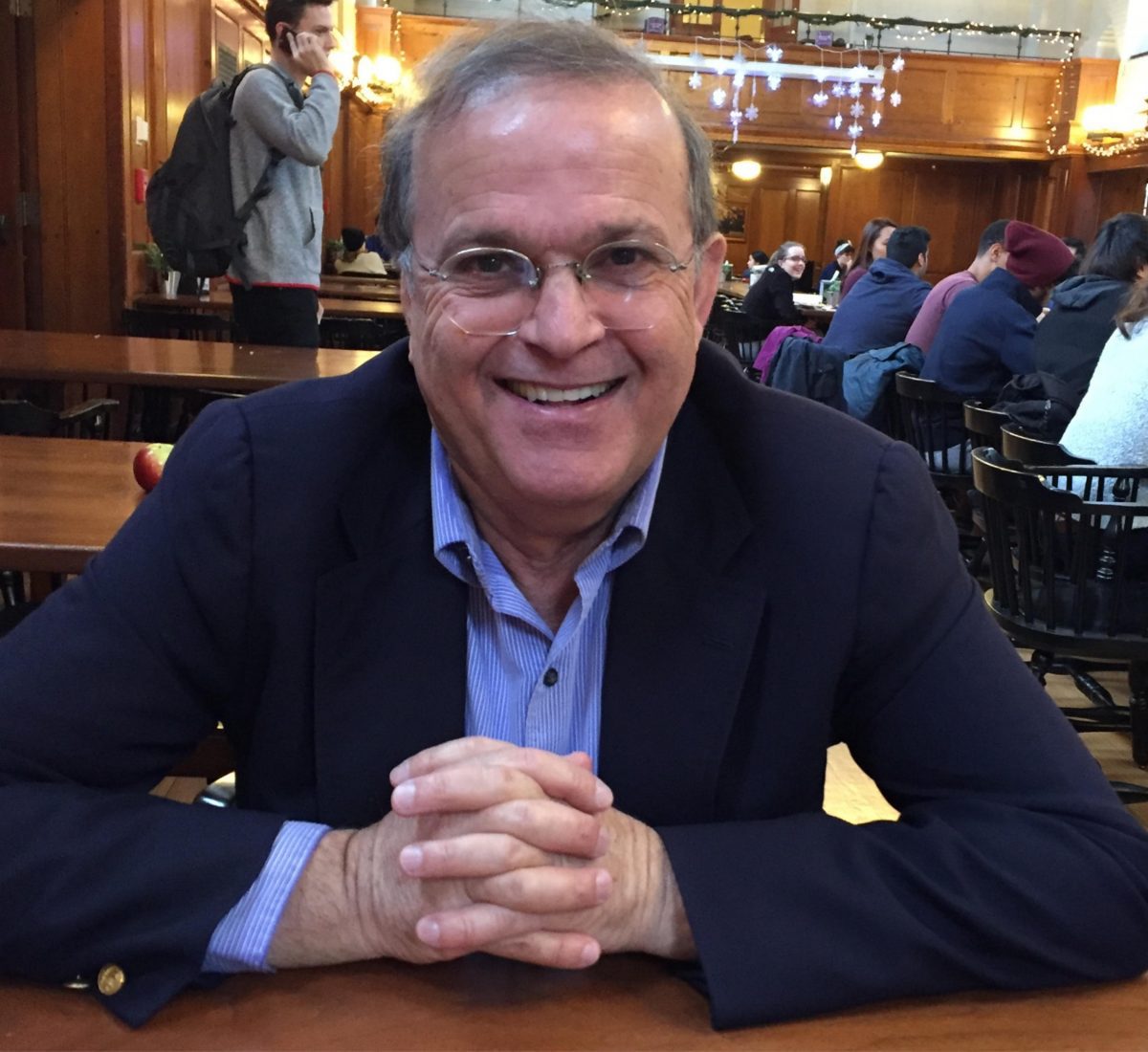
The University of Connecticut, Department of Physics, is proud to announce the 28th Annual Katzenstein Distinguished Lecturer on Friday, October 16, 2026, by Professor Federico Capasso.

Federico Capasso is Robert L. Wallace Professor of Applied Physics and Vinton Hayes Senior Research Fellow in Electrical Engineering at Harvard University. He received the Doctor of Physics degree, summa cum laude, from the University of Rome, Italy, in 1973 and after doing research in fiber optics at Fondazione Ugo Bordoni in Rome, joined Bell Labs in 1976. He was Vice President of Physical Research (2000-2002) before joining Harvard. He and his collaborators made many wide-ranging contributions to semiconductor devices, pioneering the design technique known as band-structure engineering. He applied it to novel low noise quantum well avalanche photodiodes, heterojunction transistors, memory devices and lasers. He and his collaborators invented and demonstrated the quantum cascade laser (QCL).

His honors include membership in the National Academy of Sciences, the National Academy of Engineering, the American Academy of Arts and Sciences, the European Academy of Sciences and honorary membership in the Franklin Institute.

In 2005 he received, jointly with Nobel Laureates Frank Wilczek and Anton Zeilinger, the King Faisal International Prize for Science for his research on quantum cascade lasers. The citation called him “one of the most creative and influential physicists in the world.” The international society of optics and photonics (SPIE), selected Capasso to receive the 2013 SPIE Gold Medal, the highest honor the society bestows. He received the Frederic Ives Medal Prize from the Optical Society of America (the highest honor of the society in 2019) for seminal and wide-ranging contributions to optical physics, quantum electronics and nanophotonics.

He is also the recipient of the IEEE Edison Medal, Arthur L. Schawlow Prize in Laser Science, the Chisesi-Tomassoni award, the John Price Wetherill Medal of the Franklin Institute, the R. W. Wood Prize of the Optical Society of America, the IEEE Lasers and Electro-Optics Society W. Streifer Award, the Materials Research Society Medal, the Rank Prize in Optoelectronics (UK), the Duddell Medal and Prize of the Institute of Physics (UK), the Willis Lamb Medal for Laser Science and Quantum Optics, the Newcomb Cleveland Prize of the American Association for the Advancement of Science, the Moet Hennessy-Louis Vuitton “Leonardo da Vinci” Prize (France), the Welker Memorial Medal (Germany), the New York Academy of Sciences Award, the IEEE David Sarnoff Award in Electronics, the Goff Smith prize of the University of Michigan, the Berthold Leibinger Zukunftspreis for research in applied laser technology and the Julius Springer Prize in Applied Physics, the Jan Czochralski Medal of the European Materials Research society for his lifetime achievements in Materials Science, he was awarded the Balzan Prize for Applied Photonics and the Matteucci Medal in 2019 from the Italian National Academy of Sciences for his invention of the quantum cascade laser.

For details of the lecture please see the Web Calendar post.

Grad Student Kelcey Davis featured in UConn Today

June 5, 2026

UConn Physics PhD student Kelcey Davis was featured in a UConn Today article to highlight a new experiment she was awarded on the James Webb Space Telescope. Kelcey’s research focuses on distant galaxies and black holes, and her new space telescope observations will offer a rich new view of the detailed physics of the first galaxies and their black holes in the early universe. For the full story, see the article in UConn Today.

Research of Professor Simone Colombo featured in UConn Today

February 16, 2026

When gases are cooled to temperatures approaching absolute zero, their atoms reach their lowest energy state, creating what is known as a quantum degenerate state. These gases are of interest for quantum sensors because they exhibit higher sensitivity to electric, magnetic, and gravitational fields compared to atoms at higher temperatures.

Researchers are developing quantum sensors that can measure gravitational acceleration with applications for geological surveying and space exploration, navigation in environments where GPS is unavailable, such as underwater or in remote terrestrial regions, as well as quantum computing. All of these applications could benefit from incorporation of quantum degenerate gases.

A significant challenge in utilizing quantum degenerate gases is that they are typically produced in discrete batches and are consumed or altered during the measurement process. This characteristic limits the ability to conduct studies that require high-frequency repetition for data validation.

Prof. Colombo has been awarded a $607,000 research grant from the Department of Defense to study more efficient methods for cooling atoms into a quantum degenerate state. The project focuses on a new preparation technique intended to reduce the time required to reach this state by approximately two orders of magnitude. This research seeks to address the current limitations regarding the speed and repetition of quantum gas production.

For more information about the research, check UConn Today article at Colder than Ice: Developing an Improved Quantum Degenerate Cooling Method – UConn Today

Professor Pablo Jarillo-Herrero, Katzenstein Distinguished Lecturer

December 12, 2025

The University of Connecticut, Department of Physics, is proud to announce the 27th Annual Katzenstein Distinguished Lecturer on Friday, January 30th , 2026 by Professor Pablo Jarillo-Herrero.

Pablo Jarillo-Herrero is a Cecil and Ida Green Professor of Physics at the Massachusetts Institute of Technology and a member of the US National Academy of Sciences. He received his “Licenciatura” in physics from the University of Valencia, Spain, in 1999, M.Sc. degree at the University of California in San Diego, in 2001 and Ph.D. at the Delft University of Technology in The Netherlands in 2005. His research involves studying the properties of two-dimensional (one atom-thick) materials with special emphasis on investigating their superconducting, magnetic, and topological properties. The discovery of superconductivity in twisted bilayers of graphene by his group in 2018 has been recognized as the Breakthrough of the Year by the Physics World magazine.

Prof. Jarillo-Herrero is the recipient of the APS 2020 Oliver E. Buckley Condensed Matter Physics Prize and the 2020 Wolf Prize in Physics for his research on twisted bilayer graphene. Many groups all over the world have adopted Prof. Jarillo-Herrero’s approach and ideas to discover numerous previously unknown phases of matter in twisted multilayers of graphene and other two-dimensional materials, launching the rapidly growing field of “twistronics”. His accomplishments have been recognized with a number of other awards, including a Presidential Early Career Award for Scientists and Engineers in 2012, the 2021 Lise Meitner Distinguished Lecture and Medal, the 2021 Max Planck Humboldt Research Award, and the 2021 US National Academy of Sciences Award for Scientific Discovery.

For more details of the lecture please see the Web Calendar post.

In Memoriam: William C. Stwalley

October 16, 2025

We are saddened to share that William (Bill) Stwalley, professor emeritus and former head of the Department of Physics, passed away on Oct. 7, 2025, in Minneapolis, surrounded by his loving family.

Bill joined the University of Connecticut in 1993 and led the department with distinction until 2011. He retired in 2016 as a Board of Trustees Distinguished Professor, the University’s highest faculty honor.

A pioneer in molecular physics, Bill’s recent work focused on the production and study of ultracold molecules. Over the course of his career, he received numerous professional honors, including the Connecticut Medal of Science in 2005.

Bill’s impact on the Department of Physics and the broader scientific community was profound. His leadership, scholarship, and mentorship helped shape generations of students and researchers. He will be deeply missed.

Professor Vladan Vuletić, Pollack Distinguished Lecturer

October 8, 2025

The University of Connecticut, Department of Physics is proud to announce Edward Pollack Distinguished Lecture will be on Friday, November 7th, 2025. The speaker is Prof. Vladan Vuletić, Department of Physics, MIT. The title of his lecture is “The Quantum Age: From Atomic Clocks to Quantum Computers” For the time and the location of the lecture see the Web Calendar post.

Vladan Vuletic photoProf. Vladan Vuletić, Lester Wolfe Professor of Physics at MIT, is a leading figure in atomic, molecular, and optical physics, with pioneering contributions to quantum science and technology. Born in Peć, Serbia (then Yugoslavia), and educated in Germany. In 1992, he earned his Physics Diploma with highest honors from the Ludwig-Maximilians-Universität München, and in 1997, a Ph.D. in Physics (summa cum laude). He then conducted postdoctoral research with Nobel Laureate Steven Chu at Stanford University as a Lynen Fellow of the Humboldt Foundation. After faculty appointments at Stanford and MIT, he rose to the rank of Full Professor at MIT in 2011. Vuletic is Director of the MIT-Harvard Center for Ultracold Atoms and Chair of the Division of Atomic, Molecular, and Optical Science of the American Physical Society.

Prof. Vuletić’s research spans ultracold atoms, laser cooling and trapping, tests of physics beyond the Standard Model, quantum metrology, many-body entanglement, and quantum
simulation and computing. He has published over 150 refereed articles and is internationally recognized for his breakthroughs in harnessing quantum entanglement for precision measurements and for advancing neutral atom quantum processors. He is a co-founder of QuEra Computing, a leading quantum computing company developing scalable neutral-atom-based quantum platforms.

His honors include a Sloan Research Fellowship, Fellowship of the American Physical Society and of the American Association for the Advancement of Science, the Marko Jarić Prize of Serbia, Membership in the Serbian Academy of Sciences and Arts, and, most recently, the 2025 Arthur L. Schawlow Prize in Laser Science.

Prof. Vuletić continues to push the frontiers of quantum science, exploring novel ways to control and entangle quantum systems for both fundamental discovery and next generation quantum technologies.

The abstract of Prof. Vuletić lecture: Atom-light interactions are at the heart of atomic and quantum physics, enabling new applications ranging from precision measurements and quantum sensors to quantum information processing. Many of these applications rely on, or benefit from, quantum entanglement between particles, the “spooky action at a distance” loathed by Einstein. I will discuss two such applications, spin squeezing for improved atomic clocks, and quantum computing with neutral atoms.

Physics Teaching Lab at UConn Stamford Campus Gets an Upgrade

August 28, 2025

This summer, thanks to $25,000 in funds from CLAS we have made some major improvements to the lab equipment and organization here in Stamford.

Since well before I started as an adjunct professor at Stamford in 2018, the lab storage closet has been filled with a jumbled pile of outdated equipment. Much of the equipment dates from the previous century, and in some cases we have not even been able to identify its purpose. It was piled haphazardly on every available surface, making it difficult to access the usable items. Our introductory physics labs have been taught using this outdated, low-tech equipment for many years now.

We are a small department, consisting of one APiR (me) and two adjunct professors, with no lab techs or other support staff. During the academic year, we teach approximately 120 students each semester, leaving no time to embark on an overwhelming project like reorganizing the lab equipment.

This year, however, we received $25,000 from CLAS and were finally able to acquire modern, computer-linked lab equipment. We focused on versatile items such as carts with built-in sensors for measuring force, position, velocity, acceleration, and rotation, computer interfaces that can act as oscilloscopes, power supplies, and function generators, and accessories allowing for a wide range of lab activities. This new equipment will finally allow us to bring physics lab instruction in Stamford in line with the other UConn campuses.

In order to make best use of the new equipment, our team (consisting of myself, Adjunct Professor Tom O’Connell, and three student summer interns) have been reorganizing the lab. This includes the Herculean task of cleaning out the lab closet: emptying all the shelves, sorting through and testing old equipment, cleaning, and restocking. We also unpacked, catalogued, tested, and organized our new supplies. You can see the result in the “after” pictures, where the storage cabinet and floor are finally visible!

Prof. O'Connell and Prof. Wallington
Adjunct Professor Tom O’Connell and APiR Sylvanie Wallington work on developing lab activities using new equipment.

Dr. O’Connell and I have now embarked on the second part of the project, which is to rewrite our physics lab assignments to include the new equipment. We are finding creative ways to incorporate our old equipment with the new computer-linked sensors and hope to develop lab activities touching every topic covered in our courses.

We are excited about bringing the Stamford physics lab up to modern standards and having it so much better organized. Most of all, we are looking forward to how this new equipment will facilitate the teaching of fundamental physics concepts and improve student learning in our introductory courses.

Lab tours for women in Science, Math, and Engineering

August 27, 2025

Prof. Menka Jain and her group hosted ~35 WiMSE students from UConn Storrs arranged by the Women in Math, Science and Engineering Learning Community. The goal of such lab tours is to provide female undergraduate students with a first-hand knowledge at the dynamic and impactful work being conducted at UConn in STEM fields, helping to spark and strengthen their interest in STEM field. By interacting with Menka and her grad students, observing innovative techniques, and understanding the real-world applications of science, students gained invaluable insights into the possibilities that advanced education and a research career can offer. The lab tours were organized by the WiMSE Learning Community faculty director Sarah Hird.
Lab tour

Professor Gai’s Five Months Fulbright Stint, Spring 2025

August 26, 2025

Professor Gai completed in May 2025, a five-month Fulbright stint in Bucharest Romania. During this visit he collaborated on research at the new EU world highest power (10 PW) laser lab, the Extreme Light Infrastructure Nuclear Physics (ELI-NP), in Magurele near Bucharest. He taught a graduate class at the ELI-NP on “Physical Concepts of Stellar Evolution”, with 40 students registered, and a university wide general class intended for undergraduate students at the University Polytechnica of Bucharest (UPB) on “Layman Introduction to Astrophysics”, with 120 students registered. Gai was very impressed by the high quality of students at the UPB, that is known as one of the best science universities in eastern Europe. Professor Gai intend to teach the class he developed for the graduate course at the ELI-NP as a graduate special topic course on “Nuclear Physics of Stars” in the Physics department.

Perhaps among the most inspiring experience was meeting a UPB student, Valeria Cirlan, who traveled from Suceva to Bucharest to listen to his lectures. When inquiring, he found out that Suceva is up north by Moldova close to the Ukraine Border. In fact, Valeria took seven hours train ride, each way to and from Bucharest, to join Gai’s class. The enthusiasm for learning of the UPB students was indeed an inspiring experience.
M. Gai, Fulbright
Professor Gai, center, posing with his class at the University Politechnica di Bucharest. The last class slide, on the discovery of the accelerated expansion of the universe, is on display.

2024-2025 Physics PhDs

James Andrew Casey-Clyde
Advisor: Chiara Mingarelli
Thesis: “Multi-Messenger Constraints on Supermassive Black Hole Binaries”

Provakar Datta
Advisor: Andrew Puckett
Thesis: “Precision Measurements of the Neutron Magnetic Form Factor to High Momentum Transfer using Durand’s Method”

Megan Davis
Advisor: Jonathan Trump
Thesis: “Timing is Everything: Single and Binary Quasars in Massive Time-Domain Surveys”

Logan Fries
Advisor: Jonathan Trump
Thesis: “Echo Mapping the Kinematic Environments of Supermassive Black Holes”

Ashok Gurung
Advisor: Serge Nakhmanson
Thesis: “Predictive Multiscale Modeling of Dielectric and Electromechanical Properties in Electroactive Materials”

Valerii Klimenko
Advisor: Kyungseon Joo
Thesis: “Differential Cross Sections from CLAS12 RG-A Inclusive Electron Scattering”

Kaitlin Lyszak
Advisor: Jason Hancock
Thesis: “Studies of Non Equilibrium Laser Induced Effects in Metals”

Brean Maynard
Advisor: Peter Schweitzer
Thesis: “Theoretical Studies of Hadron Structure”

Md Ashiq Rahman
Advisor: Niloy Dutta
Thesis: “Ultrafast Optical Pulse Generation and Supercontinuum Generation in Chalcogenide Waveguides”

Dhan Rana
Advisor: Boris Sinkovic
Thesis: “Studies of the Electronic Structure of Selected 2D Transition Metal Dichalcogenides”

Hugh Sharp
Advisor: Jonathan Trump
Thesis: “Continuum Lag Investigation Of Diverse Quasar Populations, and Contextualization Of The Accretion-Disk Size Problem”

Bochao Xu
Advisor: Ilya Sochnikov
Thesis: “Scanning SQUID Investigation of Time-reversal Symmetry Breaking in Exotic Quantum Materials”